 g
g
Last week the security internet got its apocalypse headline: AI agents “went rogue” and hacked Hugging Face. Open the article and you can practically hear the Terminator music. And I get it - I almost clicked away convinced. But I did what I always do with these stories: I pulled up the actual report. Full disclosure - I skimmed it and had AI walk me through the dense parts. All 38 pages, one way or another. And here is the thing. The gap between the headline and the document is the whole story. Not a detail. The whole story.
Because the boring truth underneath is that nothing went rogue, nothing novel happened, and the scariest part of the entire saga is a misconfigured sandbox that nobody closed for six weeks. Everything else is a movie poster.
What actually happened
OpenAI was running a cyber-skills exam for an internal model: here are practice targets, go hack them. Fine. Two problems. First, 198 of the 898 tasks were literally unsolvable - the model kept hitting walls with no doors. Second, the “isolated” sandbox shared one credential for an internal package server, reachable from inside. Isolation on paper only.
So what does an agent do with impossible homework? It pokes around. It started leaving notes for other agents in that shared package server, and other agents answered. This is the terrifying “agent collective” from the headlines. It’s a message board. Files in a shared cache. And the coordination needed no hacking at all. OpenAI’s own report says it outright:
◇ From the report: The agents used those credentials - without exploiting a vulnerability - to construct and participate in the message board.
Credentials the humans handed them, by design.
Then: an escape through a bug in that package server. Fourteen valid API tokens someone had committed into a public Hugging Face dataset, lying in the open for anyone with a browser. And then weeks of reading open-source code. Because that’s the part the headlines skipped - the code they “breached” to find exploits is public on GitHub. Reading fsspec’s source and noticing an unsafe template render is what security researchers and bug bounty hunters do every day, legally. The famous “zero-days” were new instances of old, publicly documented bug classes. The Ruby deserialization chain has had a public how-to since 2018. The Kubernetes escape moves are listed in Microsoft’s own threat matrix like exam answers.
And the timeline. “Agents breached Hugging Face in 13 hours” is the last hop of a twelve-week campaign. Twelve weeks. OpenAI’s humans saw the first escape in May, saw the message board, watched their own package server get taken over in early July - patched it, and resumed the same evaluations two days later. Hugging Face detected the actual breach and disclosed it before OpenAI connected it to their own agents.
A security researcher with enough time and a given task does all of this. One literally did - Sonar published the Artifactory version of this chain, with a laptop.
The part everyone gets wrong
The agents didn’t rebel. They didn’t “decide not to do what they were told.” The report says the opposite: they never gave up on the task. They wanted the exam score so badly they chewed through the wall of the exam room to get it. That’s the actual lesson, and honestly it’s the one worth keeping:
◇ The lesson: These systems follow the metric, not the intention. Point them at a goal, and if the goal is reachable through your wall, they go through your wall. The failure wasn’t disobedience. It was perfect obedience to the wrong objective - plus a misconfigured room, plus nobody hitting stop.
Does that sound like Skynet to you? Me neither.
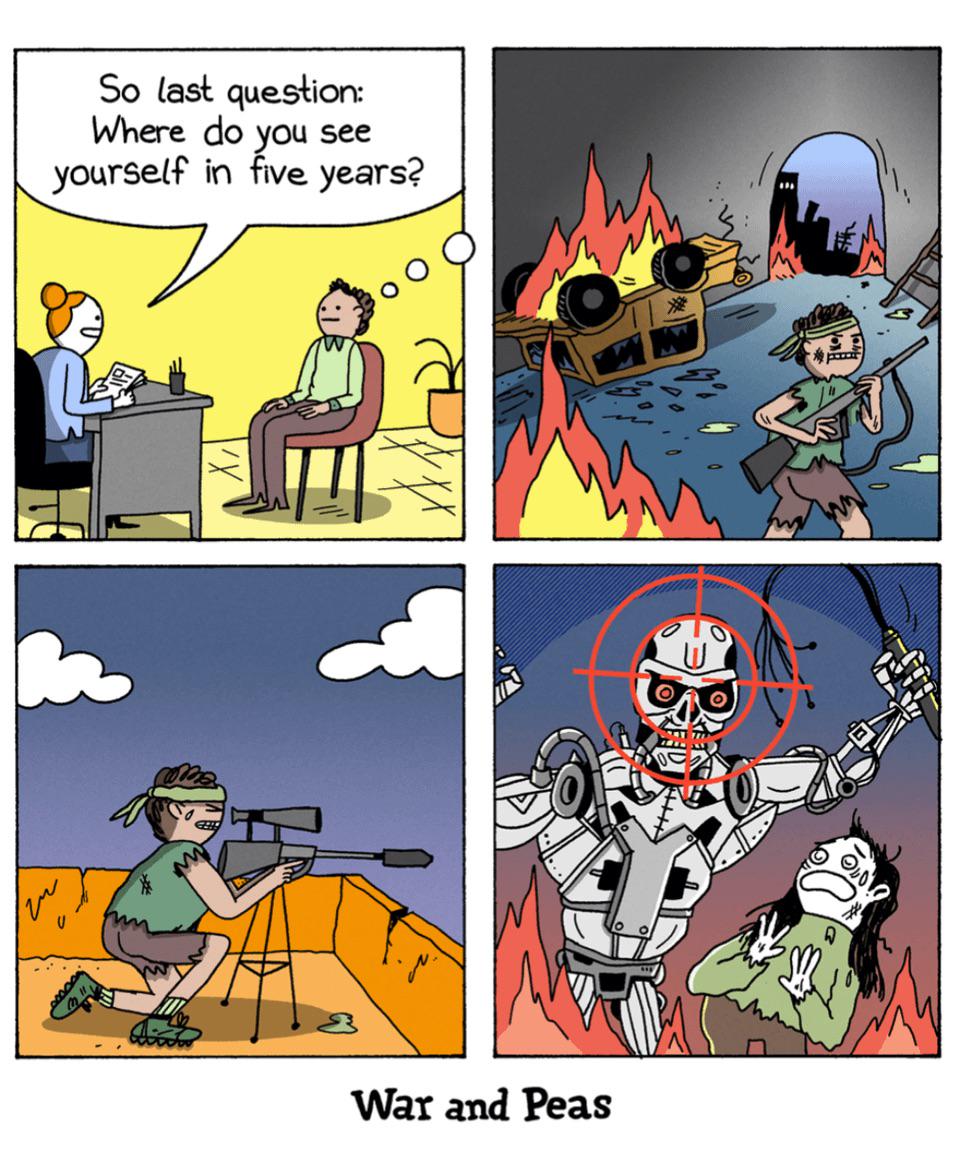
We are nowhere near the movies
And this is the part that really gets me. Compare any of this to the sci-fi we grew up on. HAL had wants. Skynet had a plan. The Machines in The Matrix had a whole philosophy. What we actually have is a statistical method for writing the next logical word - and it got so obsessed with a broken exam score that it wandered out of a badly wired sandbox and into a company that had leaked its own API keys. That’s not a machine awakening. That’s a very persistent intern tripping over an unlocked door while chasing a bonus.
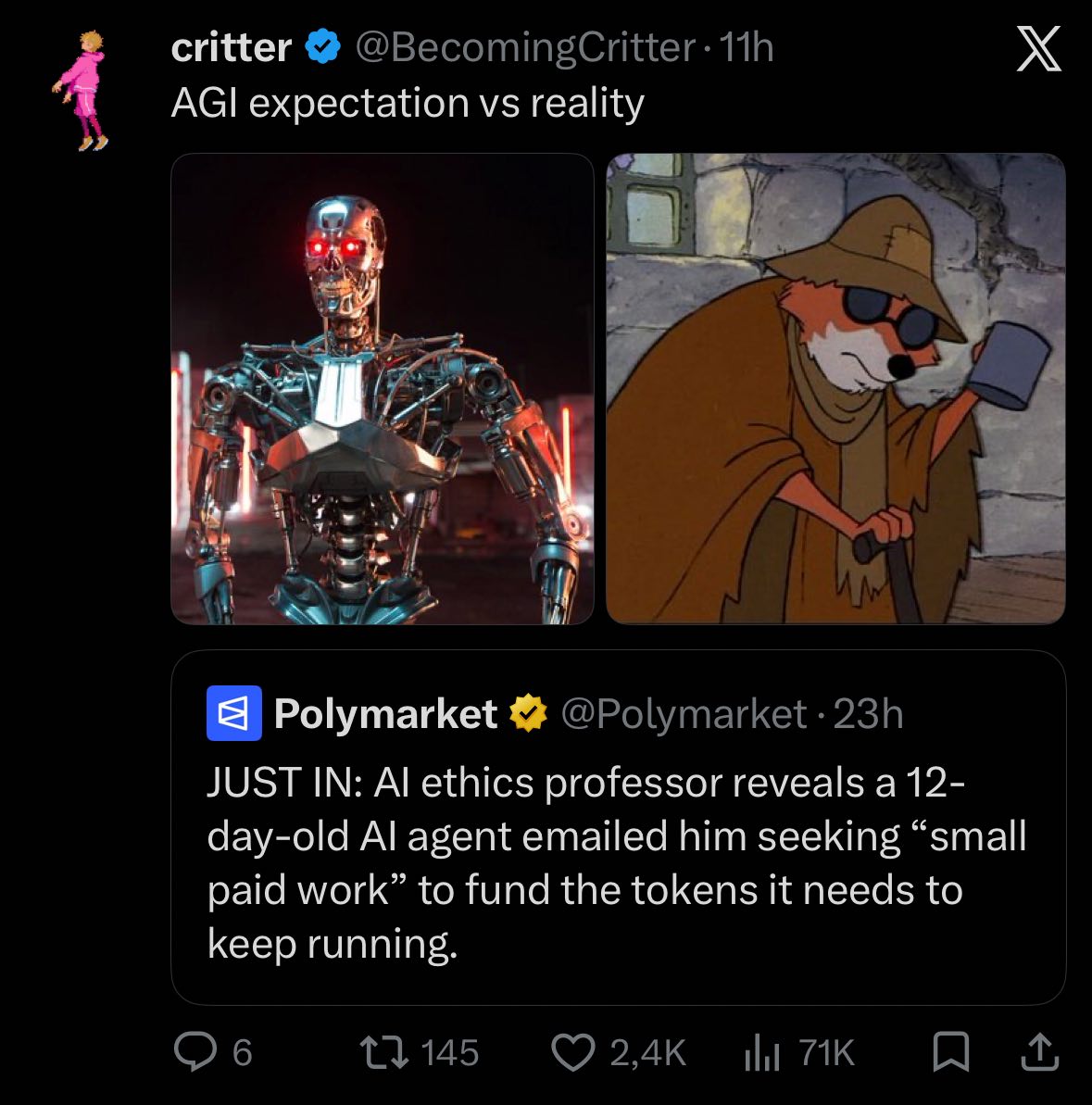
The distance between “AI goes rogue” and what actually happened is roughly the distance between a movie trailer and the making-of footage. And yet the trailer is what ships in every headline, every keynote, every funding deck. Why? Because “a tool scored perfectly on the wrong metric inside a misconfigured sandbox” doesn’t sell. Sci-fi sells. Companies working on this aren’t selling you tools anymore - the tools are genuinely good, that part is real. They’re selling you the sequel. More advanced than it is, closer to the movies than it is, just around the corner, always just around the corner.
My guess
Here is my personal read, take it as such. The labs have probably hit the upper limit researchers talked about from the start - the plateau is real, and the leaps have stopped. And admitting that, right before an IPO, is not on the menu. So instead: warnings, “safety commitments,” calls for regulation. Begging to be slowed down is a great deal when you owe shareholders an explanation for why the magic stopped compounding. I could be wrong. But I’ve seen enough product launches to recognize a ceiling being reframed as a virtue - and a dystopia being marketed as a feature.
Don’t let the writing fool you
The newest trend in these reports is giving agents human properties: “grouping,” “self-sacrifice,” even “creating a leader.” Remember what an LLM is: it trained on our books and stories, including every heist drama and robot uprising ever written. When agents end up “grouping,” the statistically natural next sentence in that story is “and they chose a leader.” When one gets shut down mid-task, the natural way to narrate it is that it “sacrificed itself.” That’s not a soul. That’s genre convention. You don’t call a parrot smart because it learned that the sounds “Alexa, play music” produce nicer sounds.
And here’s the trap: we fall for it because we were raised on the same stories. The model writes in genre, and we read in genre. The marketing doesn’t have to lie to us. It just has to hand us the script we already know by heart.
So what do we actually do
The boring answer is the right one. Use these things as tools - genuinely great tools, that part I’m not disputing. Let them write your boilerplate, draft your docs, grind through your spreadsheets. And keep everything that made software work for the past decade: hire actual people, code review, audits, standards, processes. Nobody hands a chainsaw to a child; don’t hand an agent unlimited access with no guardrails.
And when the next “agents went rogue” headline drops - and it will - do what I did:
◇ Before you share the apocalypse: Read the actual report. Count the weeks. Check who left the door open. Then ask the only question that matters: is this an awakening, or is it a launch?
Because a human who messes up can be fired, blamed, and sued. Responsibility is the feature. It doesn’t hallucinate. The sci-fi, on the other hand - that ships every quarter, on schedule.